A potential buyer is reading an industry newsletter on her tablet. Later, she scrolls through LinkedIn on her phone and sees a product demo clip from the same brand. She switches to her smart TV, where a personalized OTT ad reinforces the message. The seamless sequence results from AdTech and Martech orchestrating a unified cross-screen experience.
The customer journey is fluid, moving across mobile devices, desktops, CTVs, audio platforms, and even in-app environments. This shift has created both complexity and opportunity. The brands that integrate their AdTech and Martech ecosystems, allowing AI to function as the connective tissue that transforms scattered touchpoints.
This article shows how AI connects AdTech and MarTech ecosystems.
How AI Systems Power Cross-Screen Customer Journeys
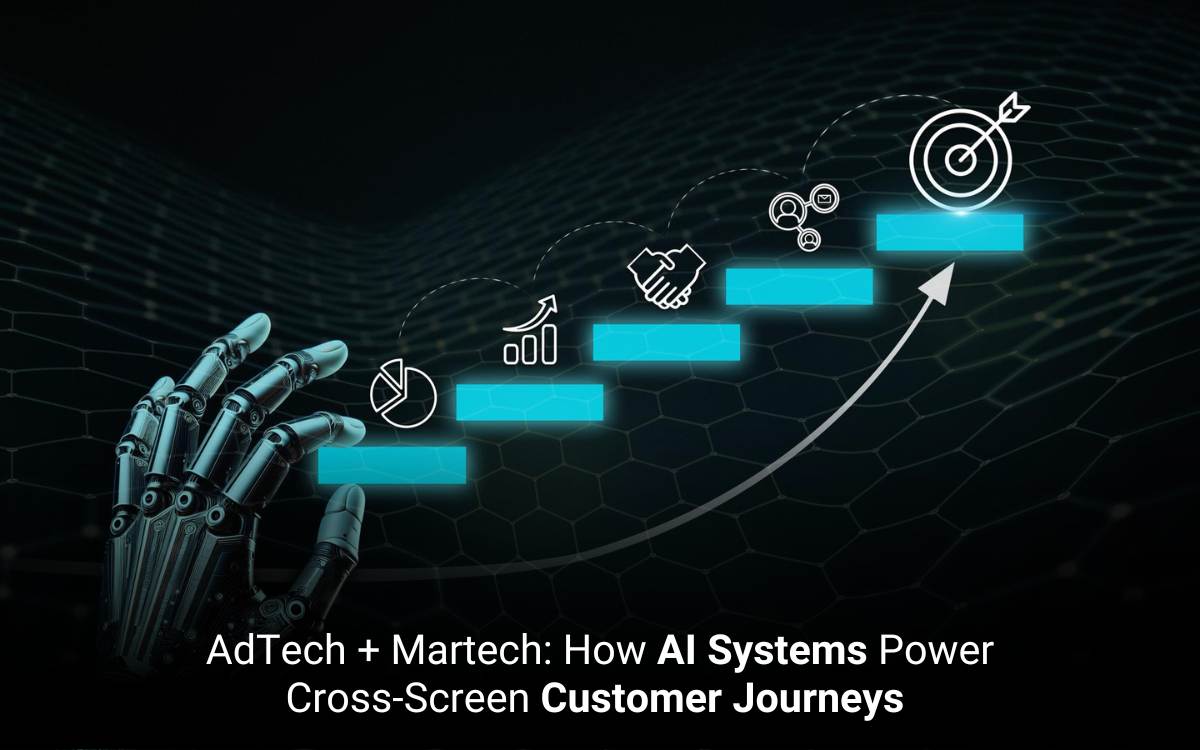
AI in AdTech + Martech delivers the intelligence layer that stitches together and shapes a unified cross-screen journey.
1. AI Stitches Together Identity Across Screens to Create a Single Profile
B2B buyers do their homework on multiple devices before engaging in sales. AI identity resolution connects the dots across screens to understand the customer behind every signal.
Example: A cybersecurity vendor uses AI to match an IT director’s mobile interactions with her desktop content consumption, serving consistent messaging across all devices.
2. AI Analyzes Behavioral Patterns to Predict Needs
Machine learning models detect shifts in engagement velocity, such as when prospects move from casual reading to deeper solution evaluation.
Example: An HRTech company identifies when a buying group starts consuming long-form CTV product explainers and triggers a personalized whitepaper.
3. AI Enables Real-time Optimization
AI aligns paid media signals with personalization from owned channels. That creates continuity even when the customer switches screens.
Example: When a prospect engages with a LinkedIn ad on mobile, the AdTech platform shares that signal with Martech, prompting the website to display case studies on their next desktop visit.
4. AI Orchestrates Cross-channel Sequencing
AI will also determine not only what message to deliver but also when and where, considering device type, attention span, and intent level.
Example: A cloud infrastructure provider employs AI to run an awareness video on CTV. This is then followed by a technical comparative charting on the prospect’s laptop.
5. AI Completes the Loop with Measurement, Attribution, and ROI Visibility
Executives understand exactly how each touchpoint moves the pipeline further along, helping them optimize budgets.
Example: A SaaS company attributes revenue lift back to integrated CTV, display, and email sequences in order to measure the value of the strategies.
Why Real-Time Data Is Critical to Maximizing Attention and Intent Across Screens
Following are the main reasons why real-time data is indispensable:
1. Attention Windows are Shrinking, and Real-time Data Captures Them
These buyers multitask on mobile, desktop, and CTV throughout the day. Their attention is fleeting, and their micro-moments provide an opportunity.
Example: A payments company detects when a CFO opens a pricing page on a desktop. AdTech signals fire supporting video ads on mobile and CTV within the next hour to reinforce recall.
2. Real-Time Data Triggers Intent Signals While They Are Still Relevant
Buying intent decays quickly. AI systems have to act on signals before the momentum fades.
Example: Live behavioral data from a cloud security provider indicates when a member of the buying group has viewed a complete CTV demo. Martech responds with an automated nurture email and personalized chatbot prompt on their next desktop visit.
3. Real-time Orchestration Enhances Relevance
Messages that match what the customer just did-not what they did last week-dramatically improve the experience.
For example, when a prospect from a global manufacturing firm clicks an ad for IoT solutions on mobile, AdTech adjusts the bid, and Martech updates the website to show industry use cases during the next device interaction.
4. Cross-screen Continuity Prevents Drop-offs Across Devices
Real-time stitching makes sure that the engagement of one screen informs the next to ensure continuity, without making the customer restart their journey.
Example: An analytics firm re-targets a prospect who abandoned a desktop demo form by serving awareness content on CTV that evening, then re-engages them on mobile with a case study the next morning.
5. Leadership Gains Visibility into Pipeline Potential
Instead of waiting for reports, executives can see which cross-screen interactions are accelerating or stalling intent and reallocate investments.
Example: A SaaS firm is monitoring rising activity in an account across several screens and immediately rebalances the budget to high-impact channels.
Why Legacy Channel Strategies No Longer Suffice for Omnichannel Audiences
Here are the key reasons why legacy strategies fail:
1. Buyers No Longer Stay in One Channel
Traditional strategies assume that audiences can be targeted within isolated channels. In reality, buyers jump between devices and platforms, rendering optimization ineffective.
Example: A cloud services provider runs a desktop-only display campaign, but its primary buying groups research heavily on mobile and CTV.
2. Legacy Strategies Cannot Unify Identity or Intent Across Screens
This means without integrated identity resolution and an AI-based signal, brands simply can’t identify the same customer across screens.
Example: A logistics company treats a visitor of the mobile app and a viewer of CTV as two different people, as their legacy systems cannot unify profiles.
3. Siloed Execution Delays Response to Actions
Legacy channels often use weekly or manual analyses. This delay prevents the organization from acting on high-intent signals in real-time.
Example: A cybersecurity vendor sees a surge in desktop product page visits but cannot react with mobile retargeting until the next campaign cycle.
4. Legacy Measurement Models Fail to Reflect the Journey
Reports built around last-click or channel attribution ignore CTV exposure, mobile video engagement, or sequential messaging across devices.
Example: A SaaS company thinks email drives the most conversions when, in fact, CTV and LinkedIn ads are driving early-stage intent, but their systems cannot connect these interactions.
5. Omnichannel Audiences Demand Personalization
Buyers sense it immediately when an experience is fragmented. Legacy systems cannot render adaptive sequences that change with each behavior across screens.
Example: A fintech company sends generic email nurture paths, while prospects who recently watched a CTV product overview receive no tailored follow-up on their next device.
Conclusion
The future of customer engagement lies in systems that can learn, adapt, and optimize. AI connects the dots not only across screens, but also elevates the account’s journey. Brands that take this approach own the next era of growth; brands that delay lag behind the ones who engineer every moment across screens with purpose.