
The ad testing platform expands its enterprise offering and hires a seasoned sales leader as brands look to predict performance before spending a dollar.
In digital advertising, creative has long been the most expensive unknown. Media can be optimized in real time, audiences can be targeted with precision, but deciding which image or video will actually perform has often come down to instinct, experience, or costly A/B tests run after budgets are already committed.
Quvy wants to change that equation.
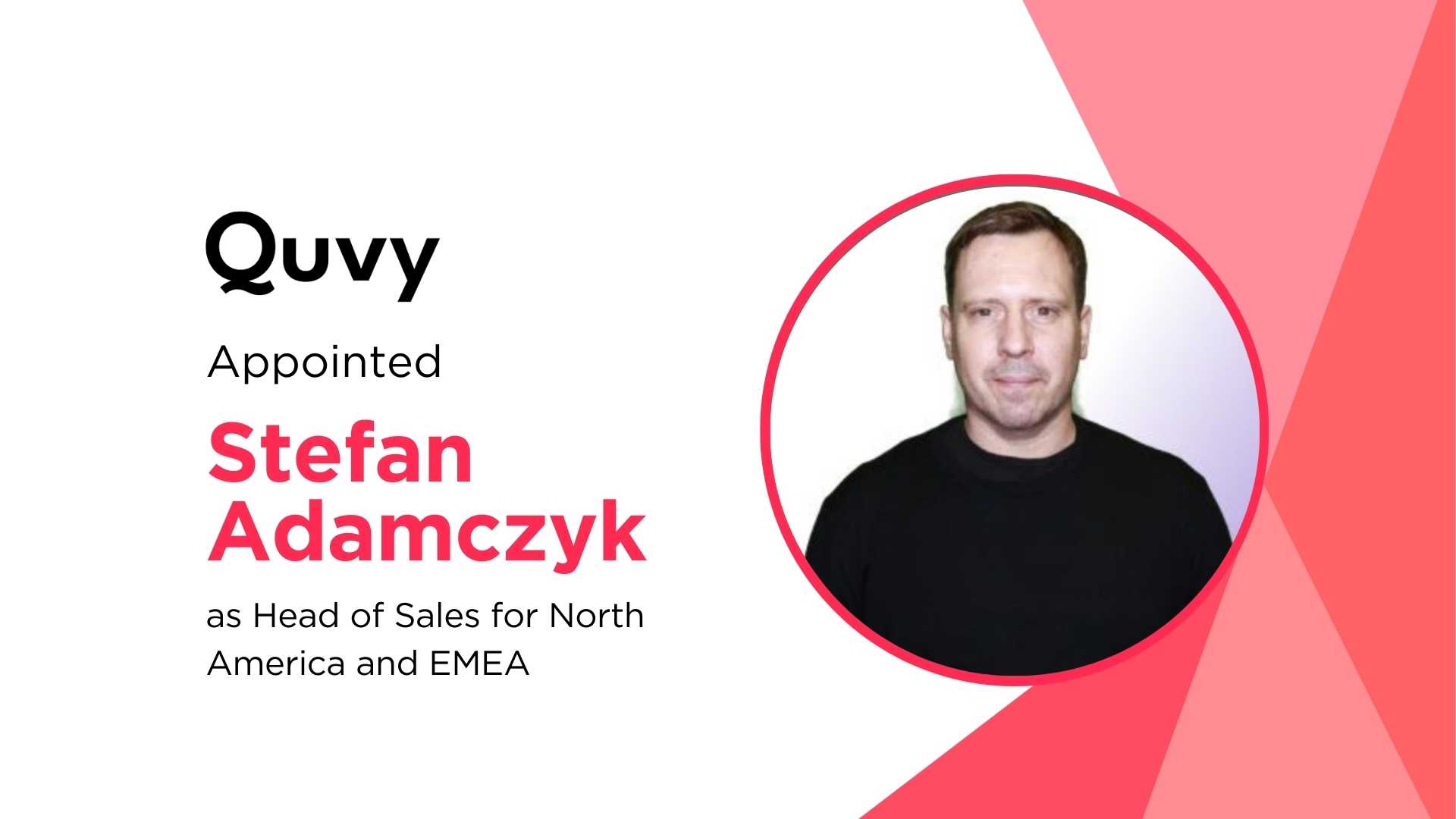
The company, which uses simulated audiences to predict how ads will perform before they go live, announced an expansion of its enterprise offering alongside the appointment of Stefan Adamczyk as Head of Sales for North America and EMEA. The move signals Quvy’s push to position itself as infrastructure for creative decision-making, not just another optimization tool.
Testing Ads Without Spending Media Dollars
At the core of Quvy’s pitch is a simple promise: advertisers can see how creative is likely to perform before it ever enters the market.
The platform allows brands and agencies to test image, video, and user-generated content ads against highly defined synthetic populations. These simulated audiences mirror real-world segments—parents, gamers, travelers, high-income households, shoppers, and more—allowing teams to evaluate creative resonance without launching live campaigns.
Instead of probabilistic estimates or black-box scoring, Quvy delivers what it describes as deterministic, pre-launch predictions. Each creative receives projected performance across key advertising metrics such as click-through rate (CTR), cost per click (CPC), and cost per thousand impressions (CPM).
The implication is significant: creative teams can identify winners and discard underperforming concepts before production budgets and media spend are locked in.
Why Predictive Creative Testing Is Gaining Momentum
Quvy’s timing is not accidental. Advertisers are under growing pressure to justify every dollar of spend as media costs rise and growth slows across many sectors. At the same time, the volume of creative required—especially for paid social, retail media, and app marketing—has exploded.
Traditional A/B testing remains useful, but it comes with clear drawbacks. It’s slow, expensive, and reactive. By the time results come in, budgets have already been spent and underperforming creative has already run.
Quvy positions itself as a response to that inefficiency. By simulating population-level behavior across thousands of personas, the platform aims to surface high-potential creative early and reduce wasted spend downstream.
Jonathan Zweig, CEO of Quvy, framed the problem bluntly: creative should not be a guess, especially when budgets are tight and decision cycles are compressed.
Enterprise Focus: Private Silo Models
The expansion of Quvy’s enterprise offering centers on what it calls Private Silo Models. These are dedicated simulation environments built for large brands and agency partners that require strict data separation.
Each enterprise client operates within an isolated model where brand assets, historical performance data, and proprietary audience definitions are fully segregated from other customers. For agencies in particular, this addresses a long-standing concern around confidentiality and competitive leakage when testing creative ideas.
According to Quvy, these private environments allow agencies to evaluate creative direction more confidently—especially during pitches—without worrying that insights or concepts will bleed into shared systems.
Adamczyk, who now leads sales across North America and EMEA, argues that this capability is changing how agencies sell ideas. Instead of relying on subjective opinions or past case studies, agencies are increasingly using predictive evidence to validate creative strategy in real time.
From Opinion to Evidence in the Pitch Room
One of the more notable shifts highlighted by Quvy is how its platform is being used upstream, not just during campaign planning.
Agencies are reportedly bringing Quvy directly into pitch conversations. By showing predicted performance outcomes for different creative approaches, teams can move discussions away from personal preference and toward data-backed decisions.
This shift matters because creative disagreements are often where deals slow down. When clients can see projected outcomes instead of debating taste, decisions tend to move faster—and with greater confidence.
Adamczyk’s appointment underscores Quvy’s ambition to scale this use case globally. With experience across both North America and EMEA markets, his role is to turn predictive creative testing into a standard part of enterprise advertising workflows.
What the Platform Actually Measures
Beyond standard performance metrics, Quvy’s simulations also surface qualitative signals that are typically harder to quantify before launch.
In addition to CTR, CPC, and CPM predictions, the platform evaluates emotional and cognitive responses such as attention, clarity, novelty, trust, and excitement. These data points are designed to help creative teams understand why a piece of content is expected to perform well—or fail.
This combination of quantitative and emotional insight reflects a broader industry trend: performance and brand metrics are increasingly intertwined. Advertisers no longer want to choose between efficiency and impact; they want creative that does both.
Quvy supports testing across images, videos, and UGC formats, acknowledging that much of today’s advertising performance is driven by native-looking content rather than polished brand spots.
Speed as a Competitive Advantage
Another notable claim is speed. Quvy says simulations are completed in under 10 minutes, allowing teams to iterate rapidly without slowing production cycles.
That matters in environments like paid social and app marketing, where creative refresh rates are measured in days, not months. The faster teams can validate concepts, the faster they can ship—and the less they rely on trial-and-error once campaigns are live.
Early adopters, including agency networks, studios, DTC brands, and app developers, reportedly see meaningful reductions in wasted spend within their first month on the platform. While Quvy hasn’t shared specific benchmarks, the emphasis on cost avoidance rather than marginal lift aligns with how many advertisers are rethinking efficiency in 2025.
Competitive Context: A Shift Away From Post-Launch Testing
Quvy is entering a crowded but evolving market. Creative analytics, attention measurement, and AI-powered testing tools are proliferating across AdTech. What differentiates Quvy’s approach is its focus on simulation rather than inference from historical datasets alone.
Where many platforms analyze past performance to guide future decisions, Quvy is betting on synthetic populations as a way to model outcomes without exposure risk. If the approach holds up at scale, it could reduce reliance on live A/B testing for early-stage creative decisions.
For advertisers operating in regulated industries, high-cost media environments, or global campaigns where mistakes are expensive, that promise is particularly appealing.
The Bigger Picture
Quvy’s expansion reflects a broader recalibration happening across advertising. As automation takes over bidding, targeting, and optimization, creative remains the last major variable—and the least predictable.
By turning creative testing into a pre-spend, evidence-driven process, platforms like Quvy are trying to bring the same rigor to creative that performance marketing has applied to media buying.
Whether simulated audiences become a standard planning tool remains to be seen. But as advertisers grow increasingly intolerant of wasted spend, the appetite for predictive clarity is clearly rising.
For Quvy, the challenge now is execution: proving that simulated performance consistently maps to real-world outcomes across channels, formats, and regions. If it does, creative gambling may finally give way to creative forecasting.

