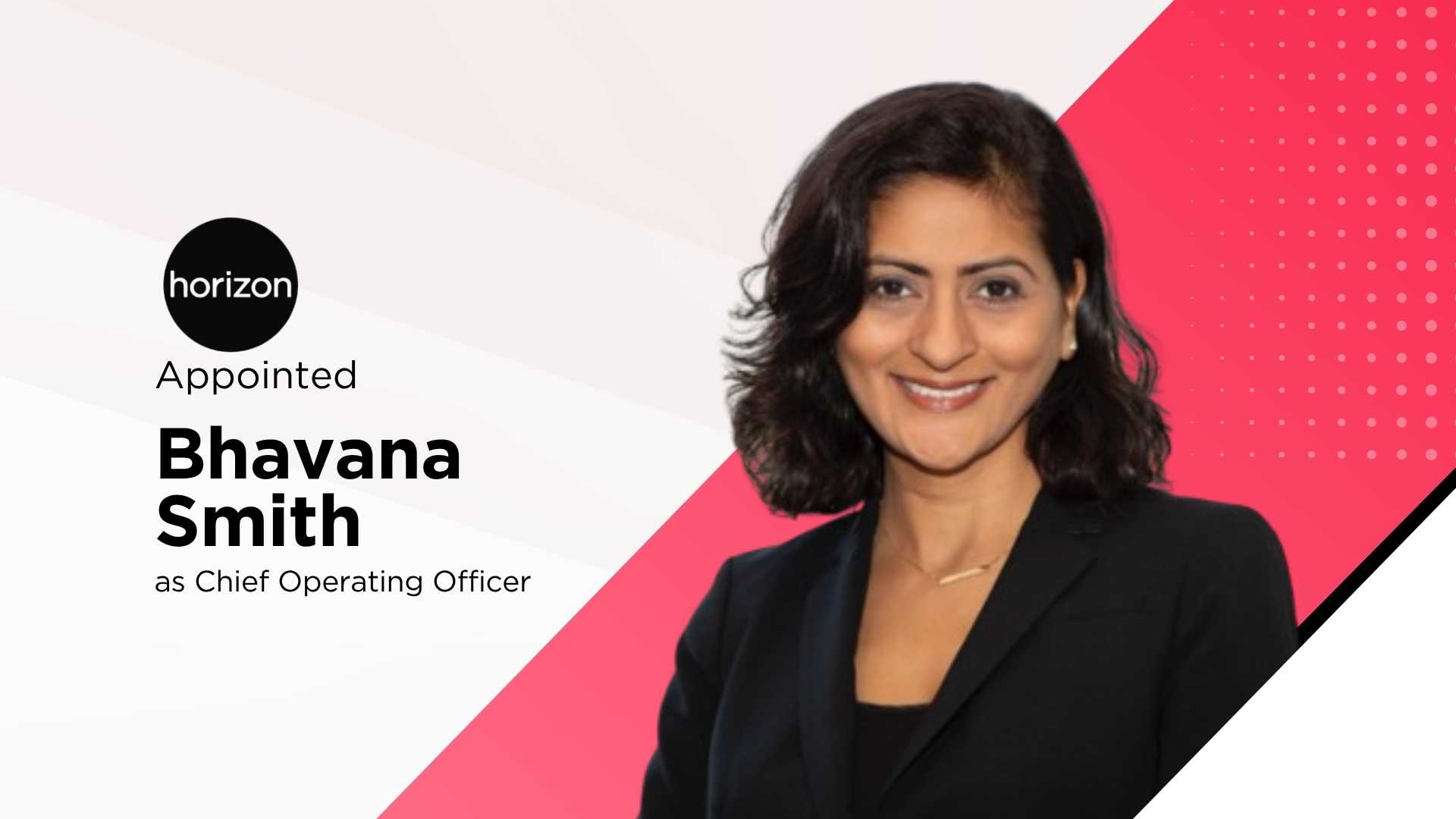
Horizon Media Holdings announced on March 26, 2026 that Bhavana Smith will take on the newly created chief operating officer role. Smith, a veteran who has held senior positions at Accenture, Publicis Groupe and Mediacom, will steer the company’s operational overhaul as it repositions itself from a traditional media agency to a “growth partner” for its clients. The move underscores a broader industry trend toward artificial intelligence‑enabled, performance‑centric operating models that tie agency compensation directly to client results.
A strategic inflection point for the independent giant
Founded in 1989, Horizon Media has grown into the world’s largest independent media agency, a status that gives it a degree of agility often missing from agency holding‑company structures. The New York‑based firm has long been known for its creative and media planning capabilities, but the latest leadership reshuffle signals a decisive turn toward data‑driven execution and outcome‑based pricing. “The traditional agency model was built for agency revenue, not client outcomes,” said Bob Lord, president of Horizon Media Holdings and CEO of Horizon Global. “That distinction is no longer sustainable.”
Lord’s comment captures a sentiment echoing across the ad‑tech landscape: advertising landscape is demanding greater transparency and accountability, pressuring agencies to prove that media spend translates into revenue, market share gains, or customer acquisition. Horizon’s response is to embed artificial intelligence, restructure billing, and align incentives with measurable business performance.
The COO’s mandate: operational rigor, workforce evolution, and workflow automation
In her inaugural statements, Smith emphasized three core priorities. First, she will tighten operational rigor and introduce performance‑management frameworks that make it easier to track the impact of campaigns in real time. Second, she plans to overhaul workforce and resource deployment, shifting away from the legacy full‑time‑equivalent (FTE) billing model that many agencies still use. Finally, she will lead a workflow transformation that integrates intelligent systems into daily operations, reducing manual hand‑offs and accelerating decision‑making.
“As the connection between marketing activity and financial performance becomes more visible, agencies are being held to a higher standard of precision and accountability,” Smith said. “This creates an opportunity to more closely align how we work with the outcomes clients value.” Her remarks echo the growing expectation that agencies not only devise creative concepts but also own the downstream business results those concepts generate.
HorizonOS and Blu: the technology backbone of the new model
At the heart of Horizon’s transformation is HorizonOS, an open operating system that stitches together proprietary tools, third‑party platforms, and a curated ecosystem of partners. HorizonOS is designed to automate routine workflows, surface deeper insights from disparate data sources, and ultimately deliver “data‑driven, client‑centric solutions,” according to the company’s release.
The system is anchored by Blu, Horizon’s AI‑native ecosystem that powers connected marketing orchestration and media management. Blu’s role is to provide transparency—showing exactly where spend is allocated and what return it generates—and to ensure that compensation structures are directly linked to performance outcomes. In practice, this means clients can expect more granular reporting, real‑time optimization, and billing models that reflect actual business impact rather than pre‑agreed media plans.
Industry observers note that such an architecture mirrors moves by other leading agencies that are building “platform‑as‑a‑service” offerings. While Horizon’s open‑system approach is distinctive for its emphasis on partner integration, the underlying principle—leveraging AI to replace legacy processes—is becoming a baseline expectation in the ad‑tech sector.
Restructuring go‑to‑market: from revenue to results
Beyond technology, Horizon is revamping its go‑to‑market framework to focus on tangible business metrics: revenue growth, market‑share expansion, and customer acquisition. This shift away from traditional media‑placement KPIs (such as impressions or click‑through rates) aligns the agency’s success directly with its clients’ financial goals. By embedding performance‑based compensation into contracts, Horizon hopes to foster deeper collaboration and reduce the friction that often arises from misaligned incentives.
“The organizations that lead will be those willing to reconsider how value is created and captured,” Smith added. “That requires new operating models, new ways of working, and a sustained commitment to outcomes.” The statement underscores a philosophical pivot: agencies must now think like growth consultants, not just media buyers.
An expanded leadership bench to drive the transition
Smith’s appointment is part of a broader elevation of senior executives who have been with Horizon for a decade or more. The company highlighted three presidents who will assume expanded responsibilities:
- Cherie Hankin Calingasan, President, Horizon Next – Charged with scaling Horizon Next’s portfolio of high‑potential and disruptor brands, Calingasan will focus on improving operational efficiency and accelerating growth for performance‑driven clients. She brings 12 years of tenure at Horizon.
- Katie Comerford, President, Horizon Commerce and Client Transformation – Comerford will oversee enterprise data strategy, client transformation initiatives, and Horizon Commerce operations. Her mandate includes integrating marketing intelligence with the “Client Architect” model to turn technology investments into measurable business outcomes. She has been with the firm for 11 years.
- Katy Ferguson, President, Horizon Media East – Ferguson will steer client growth, new‑business development, and strategic direction across all verticals for Horizon Media East. Her focus on evolving the operating model, scaling marketing intelligence, and strengthening talent structures is intended to deliver measurable results. She joins the leadership team after 17 years at Horizon.
A photo released with the announcement shows the four executives—Katie Comerford, Bhavana Smith, Katy Ferguson, and Cherie Calingasan—together, underscoring the collaborative nature of the transition. L to R: Katie Comerford; Bhavana Smith; Katy Ferguson; Cherie Calingasan.
Together, this leadership cohort aims to blend data, technology, and human expertise to deepen client partnerships and produce quantifiable outcomes.
What the shift means for advertisers
For brands and agencies alike, Horizon’s new model promises a more transparent, accountable relationship. Advertisers can expect contracts that reward actual performance, real‑time dashboards powered by AI, and a reduction in the “black‑box” perception that has long plagued media buying. The move also aligns Horizon with a growing cohort of “performance‑first” agencies that are willing to forgo traditional fee structures in favor of outcome‑based pricing.
However, the transition is not without challenges. Shifting from an FTE‑centric billing model to performance‑based compensation requires robust measurement frameworks, clear attribution models, and a cultural shift within both agency and client teams. Additionally, the reliance on AI and automation raises questions about data privacy, model bias, and the need for continuous human oversight.
Competitive context: how Horizon stacks up
While Horizon’s independence gives it flexibility, it also places the firm in direct competition with the heavyweights of the agency holding‑company world—WPP, Omnicom, Publicis, and Dentsu—many of which are investing heavily in AI platforms and performance‑based offerings. Horizon’s open‑system approach, which emphasizes partner integration rather than a closed proprietary stack, could be a differentiator for clients seeking a best‑of‑breed technology mix.
Moreover, the appointment of an external COO with a consulting background (Accenture) signals a willingness to import best practices from outside the traditional agency sphere. This mirrors a broader industry pattern where agencies are hiring talent from consulting and tech firms to accelerate digital transformation.
Outlook: a test case for the future of agency business models
Horizon Media Holdings’ strategic overhaul will serve as a bellwether for the viability of AI‑driven, performance‑linked agency structures. If the company can demonstrate that its new operating model delivers measurable revenue growth and market‑share gains for clients, it may inspire other independent agencies to follow suit. Conversely, any missteps—particularly around attribution accuracy or client adoption of new billing models—could reinforce skepticism about abandoning the tried‑and‑true media‑placement paradigm.
Bob Lord summed up the firm’s ambition: “Independence gives us the ability to act with precision and intent. We are designing entirely new operating models focused on transparency, leveraging an open ecosystem of partners, and linking compensation directly to performance. As early adopters of AI, Bhavana, Cherie, Katy and Katie are leading this transformation, ensuring Horizon delivers measurable results and acts with speed and accountability on behalf of clients.”
The industry will be watching closely as Horizon rolls out HorizonOS, Blu, and its revamped compensation framework over the coming months. For advertisers, the promise of a partner that can tie media spend directly to bottom‑line impact is compelling—provided the execution lives up to the lofty expectations set by the new leadership team.
Get in touch with our Adtech experts