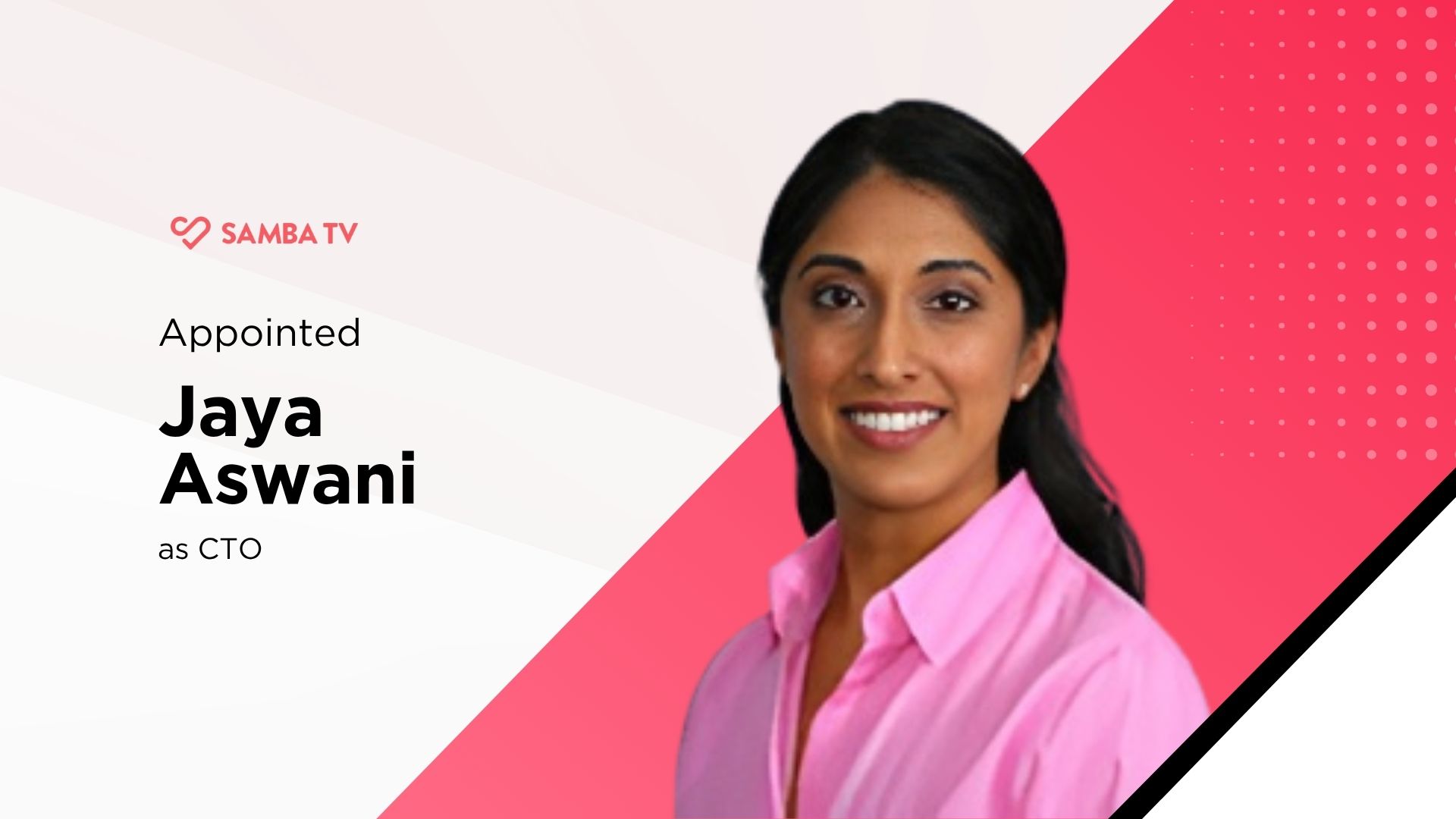
Samba TV Elevates Jaya Aswani to CTO and Hires Ramzi Nasr as VP of Engineering, Boosting AI‑Driven Media Intelligence marks a decisive leadership reshuffle at the San Francisco‑based AI‑driven media intelligence firm, underscoring its push to scale a platform that fuses first‑party TV data with real‑time ad‑tech capabilities.
Leadership Changes Signal Technical Scaling
The promotion of Jaya Aswani to chief technology officer and the appointment of Ramzi Nasr, PhD, as vice‑president of engineering are more than internal HR moves; they are a clear signal that Samba TV is preparing its engineering organization for a new wave of agentic advertising. Aswani, who joined the company in 2021 to launch the Program Management Office, now oversees a global crew of engineers, architects, and data scientists. Nasr arrives from VideoAmp with a track record of building large‑scale data platforms for Disney and comScore, positioning him to steer the engineering teams behind Samba’s analytics and audience products.
What Samba TV’s Platform Does
At its core, Samba TV operates a proprietary first‑party data set that captures deterministic viewing signals across broadcast, linear TV, streaming, and digital platforms. The platform ingests billions of impressions daily, normalizes them into a privacy‑safe ID graph, and makes the data available through APIs that power real‑time audience segmentation, cross‑device attribution, and automated media buying. By marrying deterministic TV signals with AI‑driven inference, Samba enables marketers to query “Who is watching this show on a smart TV right now?” and receive actionable audience profiles within seconds.
Why the Moves Matter for AdTech
The ad‑tech ecosystem is entering an “agentic” era where AI agents act as autonomous buyers, constantly scanning data lakes for the optimal inventory. In this context, engineering velocity, data hygiene, and platform reliability become competitive differentiators. Aswani’s promotion is intended to tighten the feedback loop between product road‑maps and engineering execution, while Nasr’s expertise in clean‑room architectures and privacy‑first data sharing promises to future‑proof Samba’s compliance posture. Gartner predicts that by 2025, 70 percent of marketers will rely on AI‑driven measurement platforms, making the robustness of the underlying tech stack a decisive factor.
Competitive Context
Samba TV’s deterministic TV data competes with a mix of third‑party measurement providers (e.g., Nielsen, Comscore) and emerging first‑party data platforms such as Amazon Advertising’s OTT insights and Google’s Audience Insights for TV. Unlike many rivals that still depend on probabilistic modeling, Samba’s deterministic signals reduce attribution error by up to 30 percent, according to an internal benchmark shared with partners. The addition of a clean‑room‑focused VP of engineering also puts Samba in direct competition with Meta’s Aggregated Event Measurement and Adobe’s Experience Platform, both of which are courting advertisers seeking privacy‑compliant cross‑device insights.
Implications for Enterprise Marketers
For brand marketers and agencies, the leadership change translates into faster rollout of new audience segments, tighter integration with demand‑side platforms (DSPs), and more granular performance dashboards. Enterprises that have struggled with siloed TV and digital data can now leverage a single API to orchestrate cross‑channel campaigns, improve frequency capping, and measure incremental lift with a confidence interval that rivals traditional TV ratings. Moreover, the emphasis on “agentic software development” hints at future SDKs that will let AI agents automatically bid on CTV inventory based on real‑time audience health scores—a capability that could shave weeks off media‑planning cycles.
Looking Ahead
If Samba TV can sustain its engineering momentum, it may extend its deterministic data model to emerging formats such as connected‑car infotainment screens and AR/VR headsets, further blurring the line between broadcast and digital. IDC forecasts the first‑party data market to exceed $25 billion by 2027, and Samba’s reinforced tech leadership positions it to capture a sizable slice of that growth.
Market Landscape
The ad‑tech market is currently fragmented across data providers, measurement firms, and activation platforms. First‑party data has become a strategic moat as privacy regulations tighten and third‑party cookies disappear. Companies like Amazon and Google are building their own TV‑level measurement stacks, but they lack the cross‑platform deterministic granularity that Samba offers. At the same time, demand‑side platforms are integrating more AI‑driven bidding engines, which require low‑latency, high‑accuracy audience signals—exactly the niche Samba’s platform fills. As advertisers shift spend toward CTV and OTT, the ability to combine TV‑level reach with digital‑level precision will be a key differentiator.
Top Insights
- Engineering leadership upgrade: Aswani’s CTO role and Nasr’s VP appointment aim to accelerate product releases and reinforce privacy‑first data architectures.
- Deterministic advantage: Samba’s first‑party TV data reduces attribution error by up to 30 percent versus probabilistic models, giving marketers more reliable ROI insights.
- Agentic future: The focus on AI‑driven, real‑time bidding positions Samba to support autonomous media‑buying agents across CTV, OTT, and emerging screen formats.
- Competitive edge: By combining deterministic TV signals with clean‑room capabilities, Samba competes directly with Google, Amazon, and Meta’s measurement solutions.
- Enterprise impact: Faster API rollouts and tighter DSP integration promise to cut media‑planning cycles and improve cross‑device frequency management for large brands.
Get in touch with our Adtech experts