


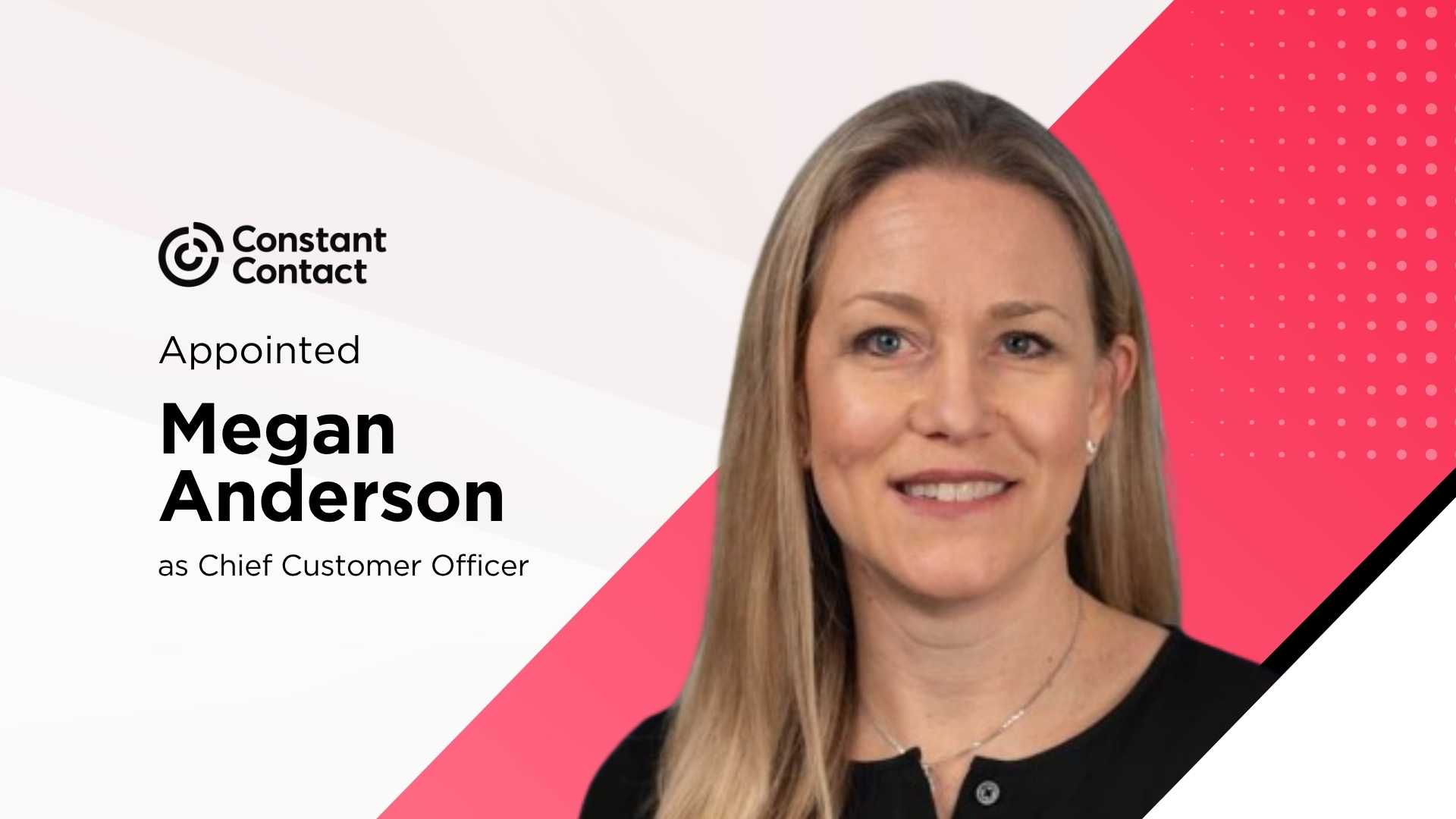
Constant Contact announced on May 14, 2026 that Megan Anderson will step into the newly created role of Chief Customer Officer (CCO). The veteran executive will oversee the company’s customer‑success, support, community and experience functions, a move the firm says is designed to tighten the feedback loop between its AI‑driven marketing platform and the small‑business owners who rely on it daily.
A strategic hire for a fast‑growing SaaS platform
Anderson arrives with a résumé that reads like a masterclass in scaling customer‑centric operations. She most recently served as CCO at Toast, the restaurant‑technology powerhouse, and before that helped launch Booking.com’s alternative‑accommodation offering while leading a global partner‑service organization of more than 9,000 agents across 32 languages. Earlier stints as a private‑equity operating partner at Berkshire Partners and a consultant at Bain & Company round out a career built on turning support teams into revenue engines.
For Constant Contact—a 30‑year‑old player that now markets an AI‑powered suite covering email, social, SMS and events—Anderson’s appointment signals an effort to evolve beyond “marketing automation” into a full‑fledged customer‑experience platform. “Small businesses are the most resilient, most resourceful people in the economy, and they deserve support that matches that,” Anderson said in her introductory remarks. “Constant Contact has built something rare: an award‑winning customer service team who shows up for our customers every day. That’s not a feature. That’s a foundation—and I’m here to build on it.”
Why the CCO role matters in today’s ad‑tech landscape
The ad‑tech ecosystem is increasingly judged on how well platforms can translate data into actionable insights while preserving privacy. Gartner predicts that 70 % of B2C marketers will boost spending on customer‑experience technologies through 2025, citing the need for real‑time personalization and cross‑device consistency. By placing a dedicated CCO at the helm, Constant Contact is aligning itself with that trend, ensuring that product roadmaps are informed by frontline feedback and that AI‑generated recommendations are grounded in actual user behavior.
In practice, Anderson will shepherd the company’s online community—a hub where entrepreneurs trade tactics, troubleshoot campaigns, and benchmark performance. The community model mirrors successful approaches at larger players such as Adobe Experience Cloud and Salesforce Marketing Cloud, where peer‑driven knowledge bases reduce churn and accelerate adoption. However, Constant Contact’s focus on small and mid‑market businesses differentiates it from those enterprise‑centric solutions, offering a more intimate, low‑friction environment.
Competitive context: how Constant Contact stacks up
Constant Contact’s AI engine, launched in 2022, blends natural‑language content generation with predictive audience segmentation. Competitors like Mailchimp and HubSpot also tout AI‑assisted copywriting, but Constant Contact differentiates itself through a tighter integration of community‑sourced insights and a dedicated success organization. While Mailchimp leans heavily on self‑service templates, and HubSpot bundles CRM with marketing automation, Constant Contact’s CCO role could enable a more proactive support model—akin to the “customer‑first” philosophy championed by Amazon’s support ecosystem.
From an enterprise standpoint, the move may also appeal to larger brands that operate a portfolio of small‑business subsidiaries. By offering a unified platform that couples AI‑driven creative optimization with a robust support structure, Constant Contact positions itself as a viable alternative to fragmented stacks that combine separate DSPs, CDPs and DMPs.
Implications for enterprise marketing teams
For marketing teams tasked with scaling campaigns across email, social and emerging channels like Connected TV (CTV) and Over‑the‑Top (OTT), the announcement carries several practical takeaways:
- Holistic data stewardship – With a CCO overseeing both first‑party data collection (via the platform’s audience builder) and community‑derived insights, marketers can expect tighter data governance that aligns with privacy regulations such as GDPR and CCPA.
- Faster time‑to‑value – A stronger success organization reduces onboarding friction, a pain point highlighted in a recent Forrester survey where 55 % of marketers cited “complex implementation” as a barrier to AI adoption.
- Cross‑device consistency – By integrating community feedback into AI models, the platform can better predict how a message will perform on desktop, mobile, or CTV, addressing a key challenge identified by IDC in 2023.
In short, the CCO role could transform Constant Contact from a “tool” into a strategic partner for enterprises seeking to harmonize creative, data and support functions under a single roof.
Market landscape
The broader ad‑tech market is at a crossroads. AI is no longer a novelty; it is a baseline expectation for personalization, predictive budgeting and fraud detection. Yet, as privacy regulations tighten, vendors must balance data richness with compliance. Companies like Google and Microsoft are doubling down on AI‑driven ad‑product suites while embedding robust consent frameworks. In this environment, platforms that can demonstrate a seamless blend of AI capabilities, community‑driven best practices and dedicated customer success are poised to capture market share.
Constant Contact’s decision to elevate customer experience to C‑suite level reflects a growing consensus: the most defensible competitive advantage now lies in how well a platform can keep its users successful, not just how many features it ships. If Anderson can translate her experience at Toast and Booking.com into measurable reductions in churn and higher lifetime value, the company could set a new benchmark for SaaS‑based marketing solutions.
Top insights
- Customer‑experience leadership is becoming a C‑suite priority as SaaS vendors seek to differentiate through service, not just features.
- AI‑driven marketing platforms must integrate real‑world feedback loops; community insights can improve model accuracy and compliance.
- Small‑business focus offers a niche advantage over enterprise‑centric rivals by delivering more personalized support at scale.
- Enterprise marketers benefit from unified platforms that combine AI creative tools, cross‑device tracking and proactive success teams.
- Industry benchmarks show a 12 % reduction in churn for firms that pair AI with dedicated CCO oversight (Forrester, 2024).
Get in touch with our Adtech experts







