


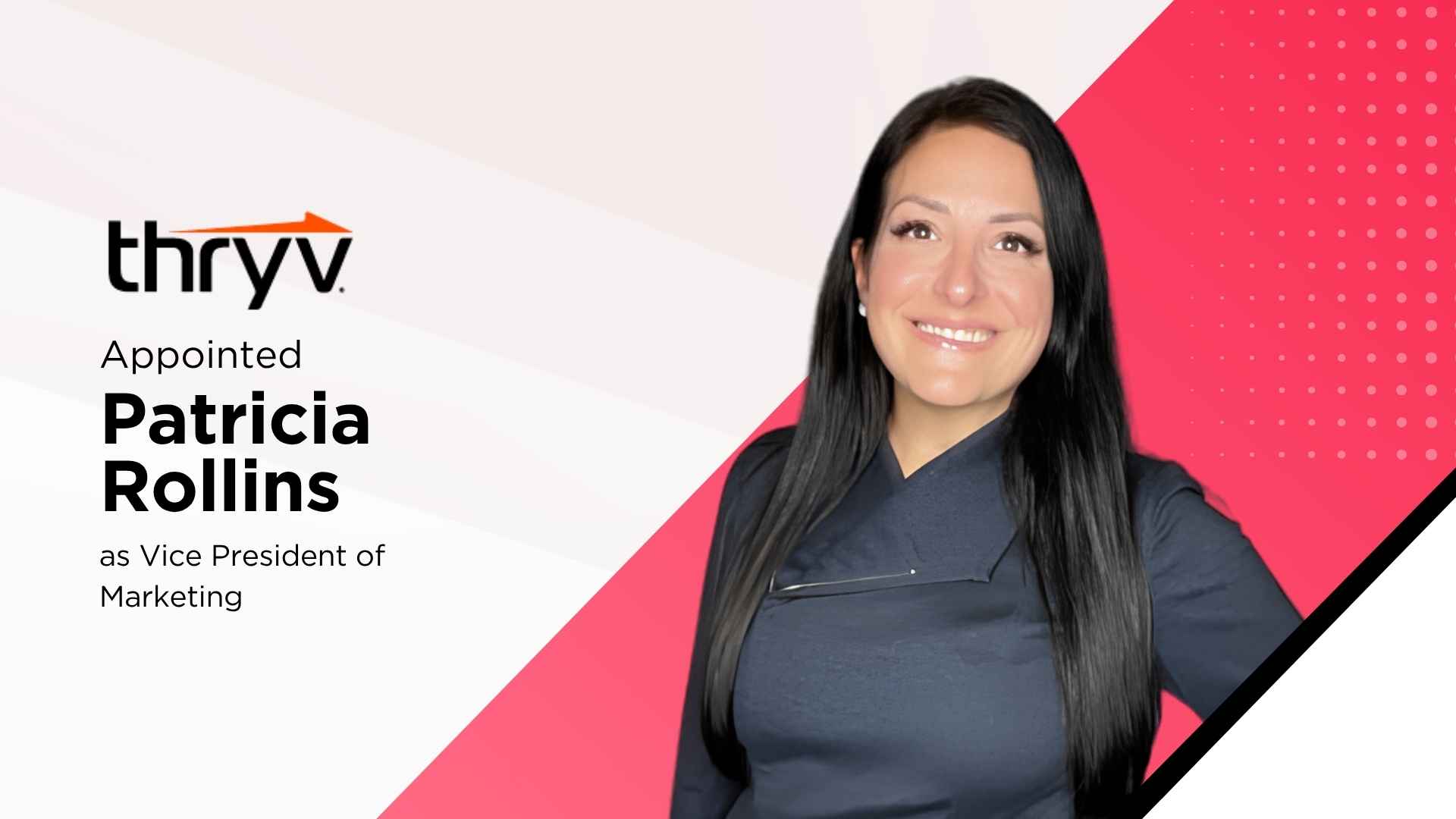
As AI moves from an experimental marketing tool into a more operational part of customer acquisition, software vendors serving small businesses are competing to make those capabilities easier to deploy. Thryv is responding by putting a veteran enterprise technology marketer at the center of its next growth phase, promoting Patricia Rollins to vice president of marketing as the company expands its newly launched Thryv Growth Platform.
Thryv Puts Veteran Enterprise Marketer at the Center of Its AI Growth Platform Push
Thryv has promoted Patricia Rollins to vice president of marketing, giving her responsibility for the company’s global marketing organization as it expands adoption of its AI-powered growth platform among entrepreneurs and local service businesses.
The appointment comes shortly after Thryv launched the Thryv Growth Platform, positioning the company more directly around AI-enabled customer acquisition, online visibility and business growth rather than traditional small-business software alone. Rollins will oversee creative, demand generation, customer acquisition and go-to-market strategy for the platform and Thryv’s broader services.
That makes the promotion more consequential than a routine executive reshuffle. Thryv is entering a market where AI is increasingly being embedded into the workflows that determine how businesses attract prospects, manage leads and measure marketing performance.
The company’s platform includes AI-powered websites, AI Lead Insights and integrations with existing CRM systems. Thryv says approximately 100,000 businesses globally use its software, spanning service categories such as plumbing, contracting, salons, legal services and accounting.
From IBM Watson to SMB marketing
Rollins brings experience from several technology companies where marketing had to translate emerging technologies into products customers could understand and adopt.
Before Thryv, she led the worldwide performance marketing team involved in launching IBM Watson and worked on digital marketing campaigns and events for Oracle CX Cloud. She also held marketing roles involving emerging technologies at Smartsheet, Typeform and AI text-to-speech company Wellsaid.
That background is relevant to Thryv’s current challenge. Selling AI to a small-business owner is different from selling enterprise software to a large IT department. A plumber, contractor or salon owner may have limited marketing staff and spend much of the working day serving customers rather than managing advertising campaigns, websites, CRM workflows and analytics.
The proposition therefore has to move beyond simply adding an AI feature to an existing software stack. The technology needs to reduce the operational complexity surrounding customer acquisition.
Thryv’s positioning reflects that shift. Rather than presenting AI as a standalone content-generation capability, the company is combining website technology, lead intelligence, customer-management integrations and growth analytics within a broader platform.
AI marketing is moving toward execution
The timing also reflects a broader change in marketing technology.
Gartner’s 2026 CMO Spend Survey found that marketing leaders are allocating an average 15.3% of their marketing budgets to AI initiatives, while only 30% said their organizations had mature or fully developed AI-readiness capabilities.
For small businesses, the gap can be even more practical: there may be no dedicated marketing operations team to configure multiple AI tools, connect data sources or interpret campaign results.
That creates an opening for integrated platforms such as Thryv. The appeal is not necessarily access to the most sophisticated underlying AI model. Instead, it is reducing the number of decisions and technical steps required to turn AI capabilities into customer-facing outcomes.
Gartner also expects AI-driven automation of marketing work to rise from 16% in 2026 to 36% by 2028.
That trend could reshape the competitive landscape around SMB marketing software. Companies such as Salesforce, HubSpot, Adobe and other marketing technology vendors increasingly use AI to automate parts of campaign management, customer engagement and analytics. Thryv is approaching the same transformation from the perspective of local service businesses.
What it means for advertisers and local businesses
For advertising and media teams, Thryv’s strategy is relevant because customer acquisition increasingly crosses the boundary between advertising platforms and the software that manages what happens after a prospect responds.
A business might acquire a lead through Google Search, social advertising or another digital channel, but the commercial value of that impression depends on what happens next: whether the lead is identified, contacted, converted and ultimately retained.
Thryv is attempting to connect more of that workflow inside one platform.
That does not make it a direct replacement for major advertising ecosystems such as Google Ads or Meta’s advertising platform. Nor does it compete head-to-head with every enterprise CDP, CRM or marketing automation system. Its differentiation is more vertical: bringing growth, marketing and customer-management functions together for smaller service businesses that may not have the resources to assemble a sophisticated MarTech stack.
For enterprise technology teams evaluating such platforms, the key question is therefore integration rather than AI novelty. Compatibility with existing CRMs, reliable lead data, measurable attribution and the ability to maintain human oversight will matter more than whether an AI feature can generate another marketing asset.
Thryv’s next challenge is proving ROI
Rollins’ mandate ultimately puts the emphasis on adoption. The company needs local businesses to understand the platform, trust its AI capabilities and connect those capabilities to measurable revenue outcomes.
That is becoming a more difficult bar across the marketing technology market. Gartner reported in 2026 that only one in three CMOs were seeing the returns they expected from AI investments, highlighting the industry’s shift from experimentation toward measurable business impact.
For Thryv, the opportunity is to make that transition accessible to businesses without large marketing departments.
Rollins’ promotion signals that the company sees go-to-market execution as a central part of that strategy. Her experience launching and marketing emerging enterprise technologies could help Thryv translate AI from a technical capability into a product proposition that local businesses can understand—and, more importantly, continue using.
The broader test for Thryv will be whether an integrated AI growth platform can deliver enough measurable customer acquisition and operational value to become a core piece of the SMB technology stack.
Market Landscape
The marketing technology market is moving from AI experimentation toward AI-enabled execution. Large vendors including Google, Salesforce, Adobe and Microsoft are embedding AI into advertising, CRM, analytics and productivity workflows, while specialized platforms are targeting narrower segments with more prescriptive automation.
Thryv occupies an interesting position within that landscape. It is not primarily trying to become another enterprise-grade advertising platform or generalized CRM. Instead, its strategy is to package website management, lead intelligence, customer-management integrations and growth insights for local service businesses.
That vertical focus could be important. Small businesses often lack the personnel needed to operate fragmented MarTech stacks, making simplicity and integration potential differentiators.
The market is nevertheless becoming harder to win. Gartner says only 30% of surveyed marketing organizations had mature or fully developed AI-readiness capabilities in 2026, while 70% considered becoming an AI leader a critical goal.
For Thryv, that creates both opportunity and pressure: AI can simplify marketing operations, but vendors still have to demonstrate that automation translates into leads, conversions and revenue.
Top Insights
- Thryv promoted Patricia Rollins to lead global marketing as the company expands its AI-powered Growth Platform for local service businesses.
- Rollins brings IBM Watson and Oracle CX Cloud experience, strengthening Thryv’s ability to market emerging AI technologies to SMB audiences.
- Thryv combines AI-powered websites, lead intelligence, CRM integrations and growth insights rather than offering AI as an isolated marketing feature.
- Gartner reports that marketers allocate 15.3% of budgets to AI, but only 30% have mature AI-readiness capabilities, underscoring adoption challenges.
- The announcement highlights a broader AdTech and MarTech shift toward integrated AI systems designed to connect customer acquisition with measurable business outcomes.
Get in touch with our Adtech experts







