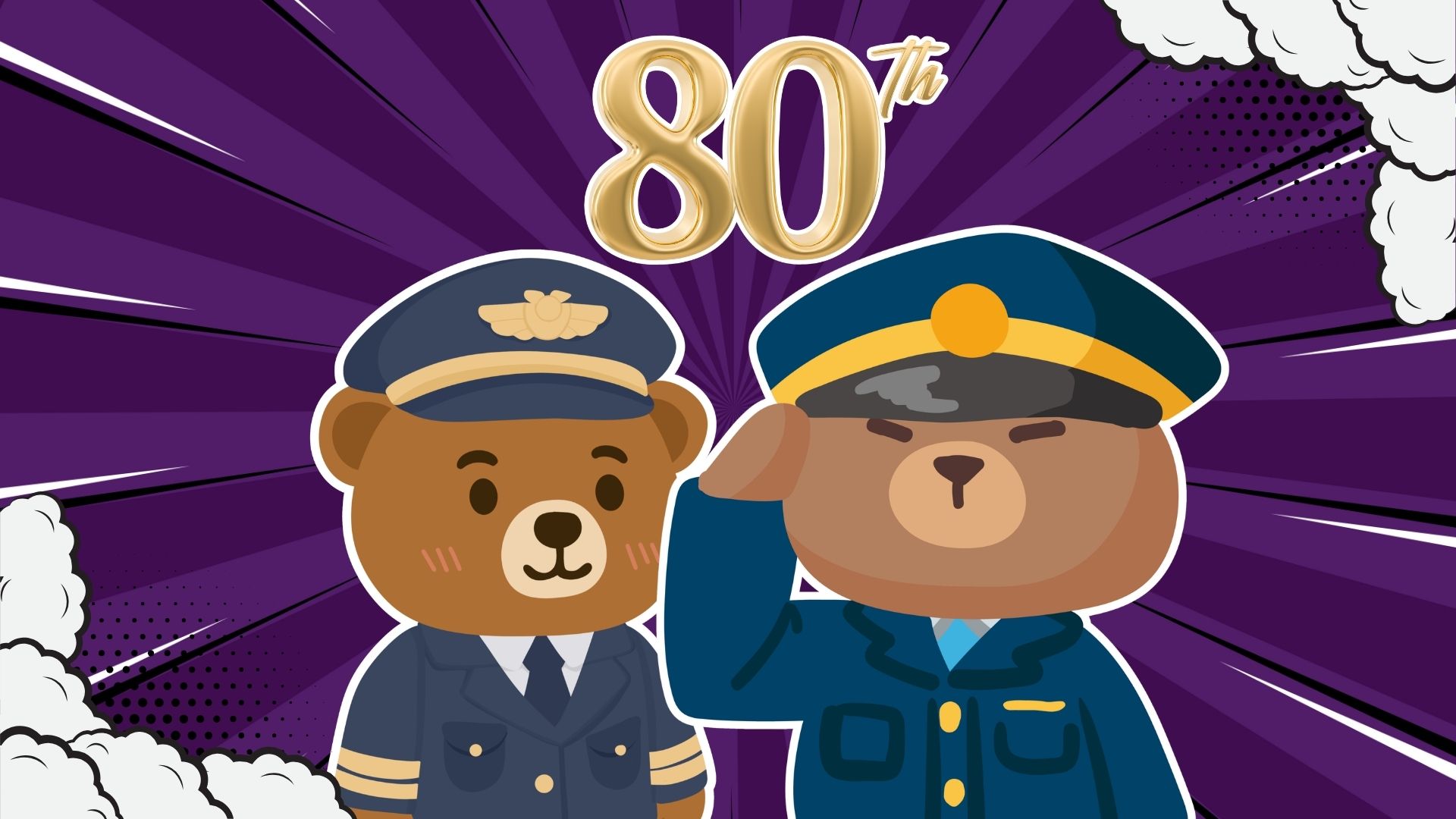
JCDecaux Transport has partnered with Cathay to transform multiple passenger touchpoints at Hong Kong International Airport into an experiential outdoor advertising environment celebrating the airline’s 80th anniversary. The installation uses branded physical displays, passenger interaction, social sharing, and retail engagement to extend airport advertising beyond conventional static placements.
Airport advertising is increasingly becoming an experience rather than a collection of individual media placements. JCDecaux Transport’s latest campaign with Cathay illustrates that shift by turning Hong Kong International Airport (HKIA) into a connected brand environment built around physical installations and passenger participation.
The campaign features Cathay’s Classic Uniform Bears, with individual bears dressed in cabin-crew uniforms representing different periods in the airline’s history. Rather than concentrating the installation in a single advertising location, JCDecaux and Cathay have distributed the experience across multiple points of the airport.
Passengers begin the experience at Cathay’s check-in counters in aisles B and C, where bears wearing the airline’s current uniform greet departing travellers. Six additional bears are positioned in the Departures Check-In Hall, creating dedicated photo opportunities.
The experience continues beyond immigration, with further installations in the Duty Free Area and West Hall. The multi-location approach effectively turns the passenger journey through the airport into a sequence of branded encounters.
That structure is important from an OOH advertising perspective. Airport media operators have traditionally provided advertisers with high-visibility environments across check-in areas, concourses, departure halls, and other passenger circulation points. Experiential campaigns can combine those physical locations into a single narrative rather than treating each placement independently.
Cathay’s campaign also adds a participation layer. Travellers are encouraged to photograph the bears and share the images on social media, while a discounted bear blind box at the Cathay Shop connects the airport installation with a retail touchpoint.
This creates several interactions around the same advertising environment: physical discovery, photography, social amplification, and potential purchase activity.
For JCDecaux Transport, the campaign demonstrates how airport advertising can be used as an experiential media format. The advertising inventory is not limited to conventional screens or printed displays; physical installations become part of the media product and can be integrated into the passenger journey.
The approach also highlights a characteristic of airport OOH: advertisers can reach audiences across multiple moments within a controlled physical environment. A traveller may encounter the same campaign at check-in, while moving through the terminal, and near retail areas.
The campaign does not introduce a new programmatic buying platform, measurement technology, or audience-targeting system. Its AdTech relevance instead comes from the evolution of the advertising environment itself and the way an airport media operator packages physical space, passenger movement, brand experience, and social engagement into an OOH campaign.
That distinction matters as advertisers look for alternatives to increasingly crowded digital environments. Experiential OOH can provide brands with physical visibility while giving campaigns opportunities to generate digital interactions beyond the original placement.
For airport media owners, this type of activation also expands the commercial possibilities of existing advertising inventory. Check-in halls, departure areas, retail zones, and other passenger spaces can become components of an integrated media experience rather than isolated locations sold independently.
Cathay’s anniversary campaign therefore provides an example of how OOH advertising is moving toward more immersive formats, particularly in high-traffic environments such as international airports.
Market Landscape
OOH advertising is increasingly combining physical placements with digital screens, programmatic buying, audience measurement, mobile interactions, and experiential formats. Airports offer a particularly structured environment because advertisers can engage travellers across multiple stages of a predictable physical journey.
Experiential campaigns add another dimension by turning physical media inventory into interactive environments. For media operators, the opportunity is to package locations, formats, passenger engagement, and complementary digital activity into broader advertising solutions.
Strategic Outlook
The expansion of experiential OOH creates opportunities for media owners to move beyond selling individual placements toward integrated environments built around a brand’s campaign objective.
The challenge is measurement. While physical installations can generate visibility and participation, advertisers increasingly expect evidence connecting OOH exposure with engagement and business outcomes. Social sharing and retail interactions can provide additional signals, but consistent measurement across physical and digital touchpoints remains an important consideration for the sector.
Top Insights
- JCDecaux and Cathay are using multiple HKIA advertising locations to create a connected experiential OOH environment around the airline’s 80th anniversary.
- The Classic Uniform Bears installation extends across check-in, departure, duty-free, and other passenger touchpoints rather than relying on a single placement.
- Passenger photography, social sharing, and Cathay Shop activity add digital and retail interactions to the physical airport advertising experience.
- The campaign demonstrates how airport media operators can package physical environments as immersive advertising formats rather than conventional static placements.
- The activation is an experiential OOH development rather than a new programmatic, targeting, or advertising measurement technology.
Get in touch with our Adtech experts